Thursday, 18 August 2016

Interview with internethacker

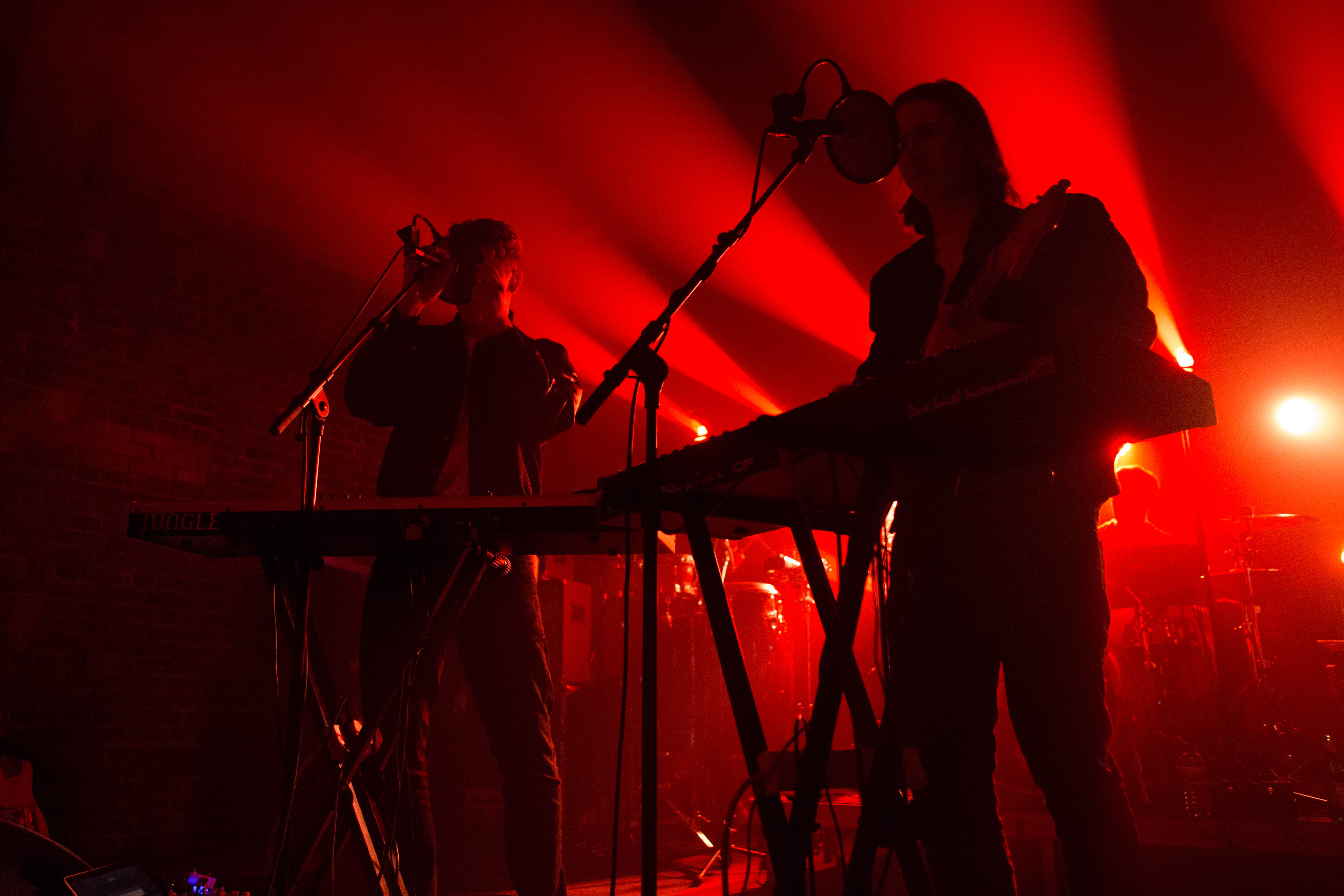
In the digital age and as products of the digital generation, it seems natural that young musicians are abandoning the typical guitar-drums-bass-singer quadruplet in favour of a more manufactured, electronic sound. As technology develops, the music scene does so too in order to accommodate the full spectrum of possibilities now available to aspiring musicians. This is certainly the case with Salem Khazali, alias internethacker, whose breezy synth tunes soundtrack the current fascination with creating music with just a computer.

Even his name demonstrates the control that young artists are gaining over their new materials. When asked where it came from, his answer demonstrates the blend that is in process between digital technology and music; he says 'me and my secondary school friend Mark started a project called Tainted Faces in 2012 [...] We took influences from the emerging web stylings of electronic witch house and glitch pop/trap/ The way I'd work on stuff was from chopping up sound glitches that I'd made, so he jokingly called me the internet hacker once, and it stuck.' Then, as an afterthought, and even a further comment on the changing environment of music promotion: 'I was also really stoked that it was available as a username, so that was a bonus.'

Although a London lad born and raised, Khazali moved to Falmouth in Cornwall in September of last year to pursue a degree in graphic design. Surely such a drastic change of scenery would have had some effect on the production of his music? He says, 'what I've noticed is the hang of pace. Things happen a lot slower here, there's less of a bustle, and there isn't much of an emphasis on being totally goal-oriented. Rather, people are doing things the way they know works, so it's more of a quality over quantity vibe. The way this affects my music is that I get quite absorbed into one track, whereas when I was in London I tried to push out a collection on Soundcloud quite quickly.'

Khazali notes that this pressure to bulk up his body of work was rather restrictive, commenting, 'I've probably deleted half of my work from Soundcloud because I really want to work on one sound instead of bouncing around from genre to genre.'


Living outside of London does have its drawbacks, however. 'My friends have met [Jamie xx] on nights out recently.' Whilst this seems rather trivial, Khazali cites Jamie xx as one of the positive examples for him in the music industry, a notoriously cut-throat world. 'He keeps it simple, real, and about the music [...] He is very humble and thankful for how he's blown up and I really like that. I dunno, just let the music speak for itself unless your persona is making some kind of point. [That's why] I also really like his anonymity.'

When it comes to describing his own writing process, Khazali is as in-depth, meticulous and eager as his music would suggest. As a base, he 'starts with modifying a synth until it sounds how I feel at the time. It's way more about melodies for me than anything else... the words just sort of fall into place.' Next comes the beat, and in this he draws inspiration from 'noughties hip hop at the moment, but I've delved into witch house and trap house.' To add interest to an already fascinating mixture of tracks, Khazali says that 'I'm clasically trained so a lot of my chord techniques are heavily influenced [by] my violin scales.'

From what Khazali intimates, it's a very spontaneous process, incredibly multimedia ('I spend a lot of time writing random things in a sketchbook, so that's where the words come from'), adding details of 'what sounds right from the get-go'. However, this apparent spontaneity can be deceptive. 'The time it takes [to make a track] will vary so much from a few hours to a few weeks. I care a lot about it being organic, but the length of time won't change the heart and soul that I hope can be heard in the final result.'

In terms of the artists that inspire him, Khazali notes Moby, Royksopp (Eple is my all-time fave') and Kanye West, to name but a few. 'I really like clever sampling and production that is detailed but not over-worked, so it's a philosophy that I'm trying to live by'. He also notes GLOWS, a schoolmate from sixth form, as a big influence, in that 'helping to coordinate his initiative Slow Dance has been a fun way to genre bend. My softer synths on my Soundcloud can be heard clearly around the time we started doing music together.'

Internethacker is clearly more than a Soundcloud username. Internethacker is thoughtful, considered, chilled. Listen up.

Listen to internethacker here

Listen to GLOWS here

Sunday, 14 August 2016

Interview with Lush's frontwoman Miki Berenyi

It’s a regular Tuesday night in everything but the fact that I am currently sat opposite Miki Berenyi, the returned frontwoman of Lush. After nearly a 20-year break, the 90s favourite indie kids make their return. Much has changed for the band in the interim: Elastica’s Justin Welch replaces Chris Acland on drums after Acland committed suicide in 1996; Berenyi all but disappeared from the music scene to start a family and hold down a regular job. In spite of this, she remains the same at the core: she sips on white wine that she brought over, and intermittently takes a few drags on an e-cigarette.

When she speaks of how it feels to be back, Berenyi says it’s ‘really quite odd actually […] I was losing sleep about having agreed to do this. I suddenly thought, “fuck, I haven’t played in twenty years, this is going to be a disaster.” And actually, it was really good to just go into the studio and sing and play guitar and think, “ok, I can still do this!”’

In spite of having been out of the game for so long, there is a clear sense of anticipation to play live again [I spoke to Berenyi before Lush’s headline shows at the Roundhouse]. ‘It’s a bit weird cos we haven’t played yet […] I went on the radio and they were like “ooh so how’s it going?” and all I can really talk about is rehearsals. I mean, I can talk about the EP a bit but even that isn’t out yet.’

Image: Allmusic
In 2015, Lush started working on Blind Spot, a new EP with new material – a fresh continuation of where the band had gotten to in their last years. ‘It’s pretty much picking up where I left off […] Although lyrically it was really difficult trying to get back into it, suddenly trying to write, thinking “ugh what did I used to write about? And what can I write about now? I can’t write about the same things!” But actually, there is a bit of a pattern to it. [My lyrics] are a bit oblique, they are personal, they are of their kind.’ She stops before ploughing on, ‘I’m not suddenly coming back like “right, I’m gonna write songs about the Labour party.” It doesn’t work like that.’

It seems strange that after such a long hiatus, Lush would decide after all that they weren’t quite finished with the music industry; everyone had assumed that they had hung up their guitars and called it a day. Not so. Berenyi says the reunion had been in the pipeline for as long as eight years, but practically just wouldn’t have worked before now. ‘I get a sabbatical after five years, so I’ve got an extra six weeks’ holiday this year,’ she explains. ‘I’m not giving up my job. That’s not gonna happen.’ She has become used to the life of a civilian: ‘If I could be at home, just open a door, play a gig and then come back and be at home, that would be great. Playing music, playing live and recording – great. But the rest of it is a fucking nightmare! It is a lot of hassle.’

For Miki, the separation from the music industry after Chris’ death was total. ‘I almost left completely. I haven’t really followed music, I wasn’t going to gigs and I haven’t played.’ She muses, ‘I don’t know how massively comfortable I ever was in that industry.’ As a response to Chris Acland’s death, everything music-related became a reminder. ‘I’m sure it’s the same for anyone who’s lost someone, but for a while you sort of randomly burst into tears, and you think you’re ready to go out and then you’re not. The music industry is not really the place to do that. You know, you’re at a gig and suddenly you’re really upset and people are like “ooh dear!” So I just completely retreated from it, just cut off all ties. Chris’ aunt trained me to become a sub-editor, and she said “ooh you should try and get work at the NME. That’s where you should go cos you know that subject”. And I wanted to go a million miles away from all of that. Totally turned my back on it, basically.’

So after what was a very conscious and decisive split from music, band business became secondary. It’s more of a case of ‘why don’t we just do this while we can’ rather than prioritising it above and beyond anything else. ‘I can still remember a flight to Japan to go and visit my mum, and I was sat for ten hours writing these lyrics because I just had to fit them in when I could.’ After musing for a moment, she adds, ‘It was really good fun!’
Image: David Lavine for the Guardian

In their heyday, Lush were pigeonholed into every imaginable genre, by the merit simply of being around. First shoegaze, then Britpop; if there’s one label they couldn’t escape, however, it was ‘girls in a band’. ‘The tricky thing,’ Miki explains, ‘is that the scene that we came from, which was really small pub gigs and a whole mix of influences, didn’t have a problem with women in bands. At grassroots level, it didn’t seem to be a problem. To be honest, it was a lot of the journalists that were fetishizing girls in bands. Then when you’re trying to be a professional and you’re going on tour, encountering crew and maybe someone local who’s doing the lights and they go “oh yeah, girl band, right I get it”. So when we were in our little enclave it was absolutely fine. I imagine it’s probably not that different now. If you’re at college I imagine it’s all very right-on and people would fucking dream of saying that shit.’

To explain what she means by ‘that shit’, Miki cites the recent interview with The Last Shadow Puppets in Spin, where Miles Kane repeatedly makes the female journalist uncomfortable by inviting her up to the bedroom. ‘Unless I stand there and act dumb, and laugh at [the men’s] jokes, it’s gonna irritate them, and then I’m a bitch.’

In terms of the constantly changing genre that they were assigned by the music press, Berenyi sees a direct correlation between this and the attitudes towards women in the industry. ‘There’s this thing in the music press of “they’re old news”. And I felt that being a woman was a part of that. It’s like, “there’s a new breed of women replacing you. We’re sick of shoegazing girls: now we want Courtney Love.” It’s one thing saying it about the music; it’s a whole other thing saying it about your gender.’
She sighs. ‘[The industry] wasn’t really created for women of 30+. When [Lush] ended I was almost 30. It gets quite difficult. When you’re 25 and it’s all kind of exciting, but there comes a point, especially for women where you think “actually I’m sick of being bloody patronised by guitar roadies”. I’m sure it’s the same for any women in the entertainment industry, but it is a bit infantile with bands.’

None of this is necessarily breaking news, of course, but every fresh report brings to light just how unfair the music industry is for women. ‘It is about men being allowed to behave a certain way, men being encouraged to behave a certain way.’ But, Berenyi argues, there is a flipside. ‘Now there are quite a lot of older women in music, whether it’s Chrissy Hynde or Debbie Harry, so for the two-steps-forward-three-steps-back that a lot of mainstream music has taken – a lot of the flesh-revealing, bitchy, un-sisterhood stuff that’s going on – there is a separate stream.’

In spite of their seemingly indefinite hiatus, Lush are back and they’re bad. ‘We’d love to make an album! But it’s all about the logistics: it’s funding it, it’s trying to find the time.’ Please find the time, Miki. I speak for the masses. Please.

Thursday, 28 April 2016

Beyoncé - Lemonade

Beyoncé returns with what is her most daring album to date. Lemonade was announced with minimal explanation, merely a screenshot of what later transpired to be the album cover and a mystery deal with HBO. The release of her visual album caused shockwaves throughout the internet. Coupled with the exclusivity of Lemonade only being accessible through Tidal before it was made available on iTunes, the hype was amplified, multiplied, exaggerated by a million so that within a matter of hours, the lemon emoji had already become the universal symbol for 'men watch out'.
Source: Allmusic

The strength of Lemonade comes from how explorative and diverse it is in terms of spanning genres. 'Daddy Lessons' is undeniably a very good country track, with Beyoncé's soulful voice weaving a wonderful story, melding and adapting to create the warbles of the mid-west. 'Pray You Catch Me' and 'Forward' were produced in collaboration with James Blake, giving Beyoncé an induction to the world of ambient, swirling indie pop. The layering of her voice in the former, then the spine-chilling harmonies of the latter, whirl around your headphones in a sad ecstasy, building up to a tragically beautiful cry. 'Don't Hurt Yourself', which features Jack White and an introductory drum beat that couldn't be anything but Jack White (see 'Freedom at 21' for further proof), is an incredibly, fabulously aggressive assertion of Beyoncé's independence as an artist, a woman, and as a wife. The hard rock works surprisingly well with her strained, desperate scream, forcing us to drop everything and listen. Not as if we wouldn't anyway. 

Lemonade is remarkable in how proudly it wears its collaborators on its sleeve. Beyoncé is now enough of an artist to be able to collaborate with big names and hold her own; these men (and they are all men) take the back seat, and Beyoncé steps into the spotlight. Aside from the great number of collaborators, Beyoncé pays tribute to her musical inspirations in a fantastic sampling and adaptation of Isaac Hayes' version of 'Walk On By' in her track with The Weeknd '6 Inch'. It creeps into the track, but then leads and directs its development, with B expertly navigating the swelling string climax. It's a triumph in music appreciation.

One of the many reasons that Lemonade has been causing a stir is the very overt references to Jay Z's suspected infidelity, and Beyoncé's boss ass bitch-ness in responding to this. 'Sorry' declares nonchalantly, "Middle fingers up, put them hands high/Wave it in his face, tell him boy bye". The hip-twirling, calypso-inspired 'Hold Up' throws in the defiant sting of "I don't wanna lose my pride but imma fuck me up a bitch". In 'Don't Hurt Yourself', Beyoncé spits out "who the fuck do you think I is?/You ain't married to no average bitch boy". One listen of Lemonade will turn you into the sassy, unapologetic and fabulous bitch you always wanted to be.

Source: Youtube
Aside from the themes of infidelity and bad ass-ery, Lemonade carries with it a strong discourse on race relations in America, both past and present. I would quickly like to acknowledge my privilege, and say that it's tricky for me, a white middle class woman, to comment on the particular resonance this album has for black people all over the world. But, as I believe that music exists as a public thing to be appreciated by everyone, there is here only appreciation rather than judgement. The visuals for 'Forward' include images of Lesley McSpadden holding up a picture of her late son Mike Brown, the death that sparked the Black Lives Matter movement a year and a half ago. 'Freedom', Beyoncé's creation with Kendrick Lamar, is reminiscent of Django Unchained in its hints of 'Unchained' from the soundtrack. It perfectly blends explosive hip hop and incendiary rap to create a message of independence - both sexual and racial. In this way, the links between 'Freedom' and Django go beyond music: the video features Beyoncé singing gospel preacher-style to an audience of black women in white dresses, reminding us of the freedom slaves achieved through the power of religion and music. Any lyric from 'Formation' could be used to demonstrate this, but it's done particularly well by the lines "I like my baby heir with baby hair and afros/I like my negro nose with Jackson Five nostrils"; they declare loud and proud a defiant pride in black appearances, a thorny topic at best given the current discourse on cultural appropriation and subjecting black women to white beauty standards in the media. Beyoncé inspires a pride in black culture and history that in a world where, politically, this is a shameful thing.

Lemonade is a total tour de force. It refuses to be silenced or spoken for; it is Beyoncé taking an entirely new direction, and all on her own terms. May she blaze trails for much much longer.

Rating: 9/10

Recommended tracks:


Sunday, 6 March 2016

Kendrick Lamar - untitled unmastered

Kendrick Lamar is one of the very few people, besides Queen Beyonce, who can drop an album unannounced and still have, to paraphrase the great man himself, the whole world talking. His third album, untitled unmastered, is a collection of tracks that he has either only performed live or that have been left on the cutting room floor over the course of producing To Pimp A Butterfly and good kid, m.A.A.d city. Never one to play it safe, Kendrick delivers once more.

As the title suggests, the tracks are all nameless, leaving it up to the listener to guess the main aim behind them. As ever with Kendrick Lamar, his lyrics are so multi-directional that it’s easy to pick up on at least one angle that means something to you and expand this out to fit the whole song. In addition to this, he manoeuvres so well through such a huge quantity of subjects over the course of just one song that in taking a step back from pigeonholing his songs with names, he allows them to fill a wider space.

With untitled unmastered, as with his other albums, the devil is in the detail. It’s present in the soft transitional lilt at the end of each line of ‘untitled 02’, adding a soulfulness that shakes up the rhymes. It’s present in the fact that his five year old son contributed the beats and piano to ‘untitled 7’. It’s present in the simple contrast between the off-the-cuff riffing of ‘untitled 7’ and the well-produced groove of ‘untitled 8’. It’s particularly present in Kendrick’s signature: a reoccurring verbal motif that creeps in throughout the album. No stone is left unturned; no aspect of any track is left untended.


Once again, we are left stunned by Kendrick Lamar. He is unashamed, unflinching and unstoppable. Long reign King Kunta.

Rating: 9/10

Recommended tracks:
untitled 8
untitled 4
untitled 2

Thursday, 4 February 2016

Django Django live at Stylus, Leeds

Fresh-faced thirteen year olds attending their first gig rub shoulders with seasoned rockers, forming the biggest motley crew imaginable and packing out Stylus for the men of the hour: Django Django. As the band appears, resplendent in piano key shirts and Christmas jumpers, they are decidedly uncool. All of that is about to change, as lead singer Vincent Neff picks up a tambourine and wields it like a talisman, entrancing the crowd as he waves it back and forth for ‘Hail Bop’. All of a sudden, the four gawky lads stood on stage are transformed into magicians, placing the audience under a spell as they weave their way through an incredibly varied set.

Django Django prove themselves to be more inventive than just another indie electro band. ‘Love’s Dart’ featured the make-shift use of a cardboard box as a drumset and coconuts as percussion; paired with an acoustic guitar, it provides a lulling contrast to the preceding ‘Reflections’.

They also expand outside of their generic bounds with ‘Slow West’; written for the Michael Fassbender film of the same name, it’s the closest the band will ever come to a Mumford & Sons-esque vibe without swapping their synths for banjos.

The most striking thing about Django Django is how much their performance suddenly puts their albums into context. As recordings, it’s easy to see how, objectively, they are undoubtedly quite good, but not hugely impressive or memorable. Live, they are electrifying. Where on the album, tracks like ‘Skies over Cairo’ are repetitive, when performed, you never want them to end.

The band’s own enthusiasm during the show is infectious. Carried through by the mesmerising drum beats, the band enter their own trance-like world which, rather than excluding the audience, pulls them in further.


Django Django: indie rock’s nice guys changing your life one strobe light at a time.

Monday, 11 January 2016

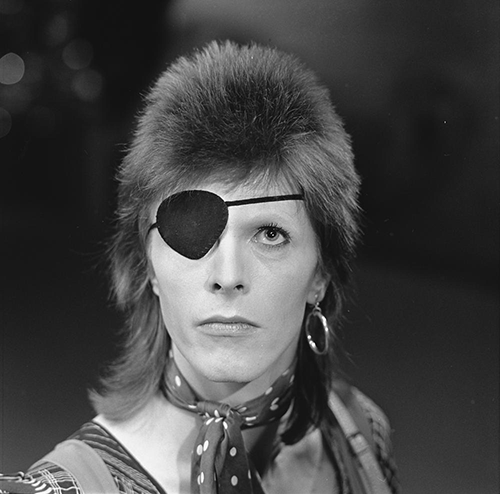
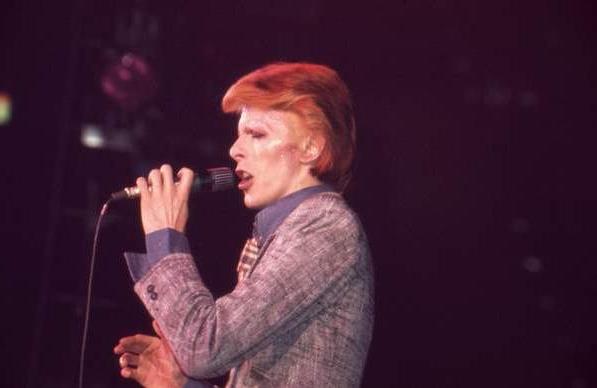
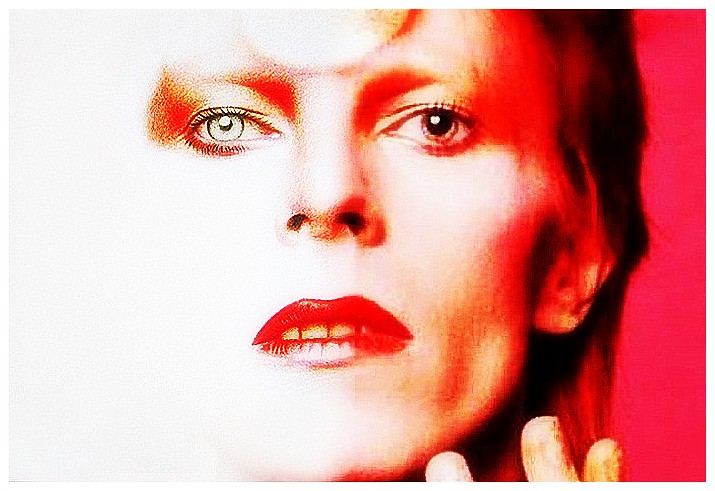
Obituary for David Bowie


'Ain't there one damn song that can make me break down and cry'

David Bowie: 1947-2016. As much as it pains me to write these words, David Bowie died this morning after suffering with liver cancer for 18 months. Living long enough to see the release of his latest album Blackstar, he died just two days afterwards. Suddenly, the album clicks into place: 'I Can't Give Everything Away' seemed before like a tease, and now becomes a final goodbye; the opening lyrics to 'Lazarus', 'Look up here, I'm in heaven/I've got scars that can't be seen', fall into place as a veiled reference to the cancer. Blackstar becomes his swan song, his final parting gift to the world.

Looking at the incredible span of his career, it's hard to believe that one individual can have accomplished so much. David Jones became David Bowie became Major Tom became Ziggy Stardust became Aladdin Sane became The Thin White Duke became The Man Who Fell To Earth. He reinvented himself again and again and again before anyone had a chance to call him old hat. There is so much of modern life and culture that only exists because Bowie had the guts to push the boundaries, to boldly go where no man had dared to go.

Maybe because he wasn't fully a man. You have to consider the courage and strength of will it must have taken to have written such an astounding album as Blackstar whilst suffering from cancer and, at the same time, keeping both of the above heavily under wraps. He remained stoic to the last, maintaining his mystical allure by refusing interviews and tours, drawing the world further into his mysticism. Furthermore, what man could dare to embody the alien beauty of Ziggy? What man had his ethereal handsomeness? What man could pull off a knitted jumpsuit like David Bowie? He was and shall remain superhuman, extra terrestrial, not quite of this world.

There are not enough words in the world to even begin to touch on the wealth of creativity Bowie possessed. Not quite content with storming the music industry, he branched out into acting, delivering fantastically memorable performances: as Jareth the Goblin King in Labyrinth, Thomas Newton in The Man Who Fell to Earth, himself in Zoolander, Nikolas Tesla in The Prestige. No child who has watched Labyrinth can ever forget The Bulge.

As silly as it is, I feel deeply touched by his death, as though I've lost someone incredibly close to me. And I tell myself that I have no right to feel this way, that I didn't know him personally, and it's a terrible affront to all of his nearest and dearest that I have the nerve to presume such an affinity with him. But in all honesty, the fact that so many people feel this way demonstrates his absolute and undeniable talent. If his music was powerful enough to make an eight year old, sat in her bedroom listening to Ziggy Stardust and dreaming of the starman, feel as though she experienced the day Ziggy died in 1973, then his career was a success. To make people feel the core of your music is surely the goal of all musicians. Bowie achieved this in force. Goodbye to the man who sold the world, gone to join the stars that he came from.

Sunday, 15 November 2015

Grimes - Art Angels

Grimes’ long-awaited new album is finally here. Claire Boucher delivers once more. Just looking at the album art, a terrifying illustration of an entrancing three-eyed girl crying tears of blood, this album will deliver just as much of a curve-ball as Visions did. The collaborations confirm this, with tracks that feature the RnB darling Janelle Monae and another one with Taiwanese rapper Aristophanes. Typically, it’s confusing, it’s eclectic, and it’s 100% Grimes.

Art Angel marks a definite shift in direction for the Canadian singer. Featuring everything from dramatically orchestral pieces (laughing without being normal sounds as if it’s been taken directly from a movie soundtrack) to the Graceland-inspired opening for Butterfly. One particularly surprising change is the sunshine and sugar-infused California; it’s how Grimes would sound if Simon Cowell produced her and she had her own brand of below-average perfume. It’s not the paradox that we expect with Grimes: predictably original. It’s electro pop, pure and unashamed.  It would be an alright song had anybody else done it, but for Grimes, it leaves you a little flat.

The whole album is far catchier than Visions; there are discernible verses and choruses, and you’re unwittingly drawn in so that before you know it, you’re on a tennis court in a Victorian wedding dress re-enacting the Flesh Without Blood video. Art Angel has an undeniable energy to it that bounds along from track to track like an excited puppy that bounds off in the park and drags you along on the lead. Realiti is a particularly stand-out track, with typically beautiful, dark, twisted and fantastical lyrics like ‘when we were young, we used to live so close to it/And we were scared that you were beautiful/And when I peered over the edge and seen death, if we are always the same’. 
Seeming non-sequitors suddenly assume an utterly new meaning when put in the context of this brilliantly ascending track, climbing higher and higher. In spite of its name, it almost transcends reality.


It’s different, but brilliant. It’s pop-y, but perfect. It’s great, so it’s definitely Grimes.

Wednesday, 23 September 2015

Oh Wonder

Photo: Allmusic
The London-based duo may have only just released their debut album, but they are pretty much pros in the music biz by this stage. Releasing one track every month for a year, Anthony West and Josephine Vander Gucht created a gradual hype that has built and built around them: a much-deserved hype that continues to grow, selling out shows in New York, Amsterdam and London even before the release of the album. That is, if nothing else, impressive for a rookie band from The Big Smoke.

With beats and synth reminiscent of Jungle, Oh Wonder pose a similarly difficult-to-pigeon-hole conundrum. The duo also employ the same tactic of double-tracking their vocals, both singing simultaneously. However, the contrast in timbre between the male and female voices allows far more room for experimentation, and they use this to their advantage. It stands out particularly well in simpler tracks like All We Do, adding variety and interest to an otherwise simply produced track.

Oh Wonder possess the handy knack of knowing how much is too much, and when to ease off. In Lose It, the introductory piano becomes the foundation on which they build the rest of the track, with layers drifting in and out as necessary; drums are built up and reduced throughout, synth becomes an ornament rather than a necessary part of the track, and the sparse bridge is the perfect lead-up to the chorus. It's everything a pop song needs to be: catchy, restrained and then loose in all the right places.

The lyrical content of the album is beautifully optimistic; take Landslide, for example. Once you brush aside the immediate Fleetwood Mac associations, you realise it's a rather lovely song of encouragement. Lyrics like 'I know your hope is heavy/But you'll get over it/You'll find another life to live' are supported and carried perfectly by the instrumental parts. The beat of Midnight Moon picks you up and takes you with it; the opening lyrics 'You with the wide eyes, don't lose your courage', along with the repeated last word, might be rather generic, but the crafting of the lyrics around the beat refreshes the old technique and draws you in.

To sum up Oh Wonder in three words: simplistic, minimalistic, and actually rather sweet. Oh Wonder definitely isn't a misnomer. If anything, it's an invitation.

Rating: 7/10

Recommended tracks:
Livewire
Without You
Technicolour Beat

Friday, 7 August 2015

The Maccabees - Marks To Prove It

After a dry spell of nearly 4 years, the Maccabees are finally back. Following their widely praised reappearance at Glastonbury, they are definitely, certainly, undeniably, back.

Marks To Prove It is a testament to what The Maccabees can do when they cut loose. The album was brought about after four years of creative stagnation, unsure of how to follow the ethereally layered Given To The Wild, and they've found the answer in unashamedly turning their backs from their previous work and embracing a more nocturnal, haunting quality that they've found.

It's a very self-contained album, kicking off with the rawness of the title track; every song, from the beautiful and heart-wrenching River Song to the unexpectedly tragic Something Like Happiness, ties and flows in to one another. The band relies on the stripped-back pianos in Spit It Out and Silence to provide a tenderness, although far from feeling worn or clichéd as a device, it adds the perfect amount of emotional sensitivity to the songs.

The album brings to light a darker, more thoughtful side of The Maccabees. Even the title of the song WW1 Portraits demonstrates a broadening of their material, which pays off. There's no pretending to be the nation's sweetheart band; there's a brutal candidness contained with the simplicity of the lyrics 'just so beautiful', repeated throughout the song and most notably at a point when you think the band are about to break down into their trademark guitar-heavy, high-flying vocals bridge, but which remains at the same volume level as singer Orlando Weeks' murmured intro.
Lead singer Orlando Weeks

The feel of the other tracks grounds the album in the band's native Elephant and Castle in its frankness: it doesn't pretend to be bubbly and upbeat, as Toothpaste Kisses was, because it isn't. Songs like Ribbon Road may, from the title, promise a certain amount of alliterative joy in the way it rolls of your tongue, but the rolling drums and darker, crunching chords undercut Weeks' soaring voice.

Yes, Marks To Prove It is absolutely nothing like Given To The Wild. Yes, it will be a disappointment to fans who were expecting it to be. No, this is not a bad thing. In fact, it couldn't be better.

Rating: 8/10

Recommended tracks:
River Song
Dawn Chorus
Spit It Out

Monday, 3 August 2015

Lianne La Havas - Blood

With her 2012 debut Is Your Love Big Enough?, Lianne La Havas took everyone by surprise, including herself; the titular track from her debut claims 'never thought it would happen/But I found myself in a secondhand guitar'. Ya know what, Lianne? We're so glad you did.

Where Is Your Love Big Enough? was a very raw portrayal of heartbreak, Blood displays a distance that shows how much La Havas has grown up. Wonderful and Good Goodbye are beautiful not only in their composition but their forgiveness and maturity. La Havas' voice transports the listener to a place that's built on the purest strain of each emotion, and when you arrive with her you can't help but cry at how beautiful and terrifying this place is. La Havas is far from your typical Identikit female singer-songwriter who plays guitar, and the sheer purity of her voice and lyrics is enough to prove this.

The trick to La Havas is that she doesn't dwell on one aspect for too long. Although she is undeniably brilliant at the more elegiac songs, she injects beautifully unexpected punches into her tracks that make her music so hard to pin down: the horns in Green & Gold that provides funk for the chorus and a floating melody for the bridge; Never Get Enough starts off as a typically acoustic guitar-driven song, with the unexpected feedback of an electric guitar kicking in for the chorus, shifting effortlessly between the two for the rest of the song; the reverb on 'turn' halfway through Grow; the entrancing intro of Unstoppable that shifts effortlessly to the wonderful pop song it is. Lianne La Havas is much more than a soul singer, but it doesn't do to pigeon-hole her. We'll only end up confused.

With many artists, there's a tendency to abandon completely what made them famous in the first place. With Blood, La Havas recognises that her guitar makes her special, and every song is carried in some way by this. Everything from Unstoppable, which expands to the size of a galaxy as it goes on, to Midnight, is upheld in some part by the familiar pangs of a guitar. Far from inhibiting the development of her songs, these two examples alone show how it merely provides a platform for La Havas to make dazzling leaps and bounds in development.

I don't think we even need to mention the sheer bedazzling power and range of her voice. She's astounding.

Lianne La Havas crept onto the scene in 2012. Blood boldly pushes the door open, proclaiming her presence.

Rating: 8/10

Recommended tracks:
Unstoppable
Green & Gold
Never Get Enough

Sunday, 12 July 2015

Florence + the Machine - How Big, How Blue, How Beautiful

Coachella, Glastonbury, an incredible new album: 2015 is Florence Welch's year. She's moving effortlessly from height to height without even pausing to take a look around at the distance she's covered. It's impressive, scary, and oh so pleasing to watch.

Anyone who attended a school disco between the years of 2009 and 2011 will remember You've Got The Love blasting out at full volume at the end of the night to calm down all the crazy 14 year olds, high on too much coca cola and large amounts of over-enthusiastic dancing. When Welch released her debut, Lungs, there wasn't a critic out there who didn't consider the double-edged sword that such a masterpiece presented; 
it was a marvel of an album, but was problematic in terms of posing the question 'so where can she go from here?' Onwards and upwards, my friends.

The beauty of HBHBHB is that it switches seamlessly between huge, confusing, anthemic organised messes like Ship To Wreck, Queen of Peace and Mother, to quieter, more considered tracks like Various Storms and Saints, St Jude and Caught. It's an album of contrasts that exaggerate and reinforce their opposites, not forcefully or clumsily, but skilfully, as though Florence is weaving a bigger picture, encouraging us to step back and look at it instead of examining the details in the individual tracks. HBHBHB takes us back to a time when music was just as much about the experience of an album as the hit songs it contained.

Not only does it present to us a wider picture, but this picture is clearly deeply personal to its painter. Lyrically, HBHBHB is moving and considerate. What Kind of Man deplores a tempestuous love affair, presenting us with Florence's insight that seems to contain the wisdom of a kung fu master as she bitterly spits 'sometimes you're half in and then you're half out/But you never close the door'. The titular track explores the excitement of a new relationship, setting in our laps such a killer opening line as 'between a crucifix and the Hollywood sign, we decided to get hurt'. In bringing her own feelings and experiences to her songwriting, Florence creates a mysticism even deeper and esoteric than tales of self-sacrifice in Rabbit Heart, or demon lovers in Howl. 

Welch also seems to have grown apart from the hippy trippy persona she had been given by the media. Although she remains an ethereal being not worthy of our earthly praises, the instrumentation of her tracks has developed far beyond the odd harp and some heavy timpani. She utilises the brass section much more frequently, and even when she has the normal line-up of guitar, bass, piano, drums, she makes it work to her advantage. Take Delilah, for example. The multi-tracked vocals provide far more texture, where the strings and piano add atmosphere to the pounding drums. As the song builds and swirls, more and more instruments put in their tuppence worth to make Delilah one of the most beautiful and dance-inducing tracks on the album.

If there were doubts that Florence was up to headlining Glastonbury, this album surely proves that not only is she up to it, she surpasses all expectations. We bow before you, our ginger-haired queen.

Rating: 9/10

Recommended tracks:

Monday, 29 June 2015

Glastonbury 2015

Source: Wikipedia
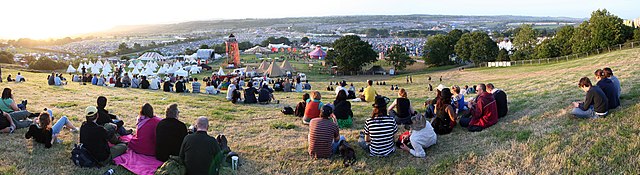
After so many years of gazing longingly at the BBC coverage of Glastonbury, sitting warm and dry on my sofa at home, the Eavis' gigantic creation always seemed like a bit of a myth. Couple that with the astronomical ticket prices and the fact that they sell out within minutes, actually going never quite seemed like it was on the cards. Glastonbury was always a far-off fairy tale which changed with each telling, like a folk story passed down through generations, the true meaning always shrouded in mystery. However, with 200,000 people there, the experience itself was sharply real and not at all mysterious.

First off, I would like to make something very clear: the mud is not exaggerated. Although 2015 was relatively dry compared to recent years, the tramping of huge crowds up and down the huge site meant that the mud remained and was impossible to escape, However muddy or cold or rainy it was though, this did not dampen the spirits of either the crowds or the bands. There was always a smiling face wherever you looked, and a cheerful word said in passing. The spirit of Glastonbury is so communal and welcoming that it's impossible to feel like an outsider; the hippie origins of the festival have survived in its open-mindedness towards complete and utter strangers, and everyone is willing to have the best possible time with the best possible people, whoever they might be.
Source: Wikipedia

A few of the more difficult things about Glastonbury are (a) the crowds and (b) the size of it. We'll deal with (a) first. When there are 200,000 people all crammed into one space, all desperate to see the same things at the same time, it's an understatement to say that moving around is a wee bit tricky. Getting anywhere near the front of the Pyramid stage is a challenge of enormous size, unless you're willing to sharpen your elbows and push your way to the front, or you fore-go all calls of nature for the entire day, be they stomach or otherwise related. Ok now onto (b). The site is 900 acres. That's many many acres to be trudging from one end to the other throughout the day and night in desperate attempts to see all the bands you want to and soak in every last bit of the festival that you can. It is, therefore, impossible to do and see everything. Although this does mean that your legs ache by Monday morning, it's worth it to see the huge range of people, acts and entertainment that there are at Glastonbury. However if you do want to avoid running up and down 900 acres of farmland, pick the things that you really want to do and spread them out on different days so you do the things that are close together all on one day. It saves a lot of necessary leg-power.

Source: Wikipedia
And as for the music, I don't know if I can talk about it all here. Literally whatever you are into, there will be something for you, guaranteed. From Burt Bacharach to Jungle, Lionel Richie to Slaves, Glastonbury is the definition of 'something for everyone'. Some stages are dedicated to certain genres, such as Leftfield and The Park, and others, like the Other Stage and the John Peel Stage, cater to huge ranges of tastes, from the rising stars to old hats. Seeing as you pay so much for a ticket, you are given a free guide to the festival upon arrival, outlining the schedules for the weekend and allowing you to plan out what you want to see and where you want to go. One thing in common for all artists performing is how thankful they are to be there. They all recognise the cultural importance of Glastonbury Festival, and all know how lucky they are to be performing their music to thousands upon thousands of people, and to watch them give thanks to the audience in the middle of a set is
rather beautiful, especially when it's as heartfelt and genuine as they all were.

Where would a festival review be without a couple of highlights, eh? Patti Smith bringing the Dalai Lama on-stage so a crowd of at least 50,000 could sing him happy birthday for his upcoming 80th birthday. A man dressed in a mantaray costume running around the stage at Slaves for their song Feed The Mantaray. Kanye West flying above the crowd on a crane. Florence placing a flower crown on an adoring fan's head whilst singing 'this is a gift'. George Ezra's dad handing him his guitar for his change-over. FKA Twigs' insanely beautiful outfit. Wolf Alice's not-so-secret set on Thursday evening. Pussy Riot acting out overthrowing an advocate of Putin's regime whilst standing on top of a huge Russian tank. Jamie T joining The Maccabees for their song Marks To Prove It. Everything about The Who. Years & Years' frontman's beautiful rainbow besequined top to mark London Pride. There are far far more than I can put here, which just goes to show the absolutely high standards of the festival itself.

In spite of having just written rather a long review of the festival, I'm speechless in thinking of a way to sum it up, so I'll do it in three words. Just. Fucking. Go.

Saturday, 31 January 2015

Shura

Source: Allmusic
One of the (many/thousands/bajillions) of reasons why Shura is so admirable, both in her music and work ethic, is that she does everything herself. Not only does she sing, but she produces, remixes and shoots her own music videos; in a world where it's only too easy to ring up the expert to get the job done quickly and easily, it's astounding that she still has the energy left to write the damn songs. The west London gal has gained critical acclaim very quickly, not just from the BBC's Sound of 2015, but from fellow Shepherd's Bush pals Jungle, as well as Chloe Moretz and Huw Stephens. The world is currently awaiting the release of her debut album, which, if her recent tracks are anything to go by, will most certainly not disappoint.

There's a fabulous mystery to Shura in that she's everywhere and yet nowhere all at once. The swirling, gorgeous build of songs like Touch gradually fills the space, but the very low-key production and whispering beauty of her voice mean that it remains just on the edge of your consciousness whilst you're listening to it, and seeps gradually in to your awareness. She pops up for the first few seconds of her video for Touch, and then not a trace of her can be found for the rest of it. Her songs are almost gloriously introverted, just the kind of music that proper headphones were invented for. This is added to by the fact that she produces all of her songs in her bedroom, it's where, she says, 'they start out as little ideas and forays into craziness'. It adds that irreplaceable personal touch to her music that adds to the meticulous care taken over everything, and what draws us in.

Source: Allmusic
Just Once is, quite honestly, one of the best songs about one night stands that doesn't involve the phrases 'all night long', 'baby right there' or 'timber'. It's strikingly similar to Daughter's Amsterdam in that it's quite tragic in its depiction of the need for human company to break the monotony of unbearable loneliness. The rising synth motif and the tentative question 'have you ever been lost' is quite plaintive in its reverberating subtlety, but as it fades out it you're left feeling unfulfilled, in need of so much more. Unfortunately, the only song available to buy from Shura is Indecision, and it's far bolder and surer (haha, so punny) of itself than the other tracks. It starts off with a echoey, clear drum, swiftly followed by a very clear synth line that's lightly and briefly decorated with a beautiful falling phrase that's soon swallowed up by the vocals. It's put together so masterfully, and the lyrics are such a good example of master-crafted banality interwoven with emotional insight, you can't help but bop along.

Not only does Shura do her own tracks beautifully, she adorns other people's absolutely wonderfully. Well, more than adorn. Complete, really. Her collaborations with Hiatus (a.k.a. Cyrus Shahad) are the most astounding example of how two artists can work together to utilise the best of what the other has, not just to name drop. The close harmonies on Cloud City are - I don't know, I've used up all of the positive superlatives in my vocabulary. All I'll say is you have to hear it to believe it.

The delicate certainty with which Shura operates is worthy of much more attention than she has received so far. Her songs are arresting in their simplicity, and all I can say is that I want so much more from her before this year is out. Watch this space

Rating: 9/10

Recommended tracks:
We Can Be Ghosts Now (actually Hiatus ft Shura)


Tuesday, 28 October 2014

The 2 Bears - The Night Is Young

Source: Allmusic
2 Bears have commanded a certain amount of attention for an underground DJ duo from London. Their second album, The Night Is Young, builds on the boisterous and brawling precedent set by their debut, Be Strong, and is enough of a throwback to the Detroit house scene to make you slap smiley face stickers on everything in sight.

The two bears in question, Raf Rundell and Joe Goddard, are not the most obvious choices for DJ aficionados. They're not super slick, MTV-ready like the majority of the DJs that dominate the charts nowadays. In fact, they're as normal and grounded as you could hope for someone in the music industry ever to be. They embody the spirit of everyone who's ever drunkenly thought that they could be the next Calvin Harris if they thought to put their mind to it, except they really are the next Calvin Harris (but better). Despite their evident expertise (Goddard formed Hot Chip with Alexis Taylor, and Rundell is a producer), they don't take themselves too seriously, and are careful to intersperse the very clean beats with snippets of their boyish humour. The chorus of See You is honestly just an excuse for them to mimic someone who has quite a funny voice. Guys after my own heart. It's this very relatable quality that makes them instantly appealing and quite endearing. You can't help but like them, especially once Rundell has commanded you to buy their album because 'my children need wine'.

Source: Allmusic
The 2 Bears are the masters of the quality electro-pop tune. First came Warm & Easy, mashing up every amazing holiday you've ever had and squashing it all into one song, and Bear Hug, the anti-sleazy club song. The Night Is Young gave the world Not This Time, a perfect mixture of angry Taylor Swift break up song, a soul vocals and the slickest production you've ever heard. Coupled with one of the most flamboyantly fabulous music videos I think I've ever seen (who knew it was possible to look that sexy whilst cleaning the oven), not only is it a stand-out track on the album, but it makes for one of the most satisfying shower songs. Trust.

Another astounding thing about any 2 Bears song is their ability to weave an apparently unrelated melody into a seemingly complete song; it's only after this section has passed that you realise the song couldn't ever really be complete without it. Without the ethereally dark section towards the end of My Queen, there wouldn't be that much to talk about. Not only does it add extra depth to the song, but the chance it allows for the vocals to move into a soulful, albeit slightly simplistic, tune, giving the lyrics a meaning that they would never have otherwise had.

There's something vaguely surprising about 2 Bears. It could be something to do with the scruffy appearance, or the unexpectedly, sweetly smooth voice that comes out of Rundell, but there's something about them that doesn't quite match up. Maybe it's just that nobody expected a house come-back to be this fucking good.

Rating: 9/10

Recommended Tracks:
Angel (Touch Me)
Get Out
Not This Time

Thursday, 4 September 2014

Brick Lizard

Brick Lizard seem like yet another rock band trying to make it in the ever-changing music world, but there's something slightly different about them.They sound like when your little brother has just discovered rock and roll, and picks up a guitar for the first time. Although obviously their skills are far more advanced than that, they've managed to preserve an element of that essential raw passion for music that seeps through every pore of their tracks. For example, Jealous, a track from their new demo, is laden with references, musically and lyrically (the thinly veiled nod to the famous 'I drive my Chevy to the levy' from American Pie is a standout) that map their influences, giving a respectful round of applause to their roots, and then moving on, making something very new out of something as old as the hills. They play so effortlessly, and the sparse layering exudes a couldn't-really-care sort of attitude, which is enhanced by the unpolished, rough diamond vocals.

When talking about the song writing process, both Rowhan, the guitarist, and Uri, bassist and vocalist, are equally modest. "It's sort of 50-50", says Rowhan, looking for Uri's approval. The riff usually comes first, which is then perfected before Uri adds vocals and lyrics. "I've been in bands before," he says, "but I've never written lyrics for the kind of music we're playing now." No matter - the lyrics spurt out in a stream of consciousness manner, and are almost Turner-esque in their euphemistic provocativeness; in Broken Bricks, the line 'your back-door tricks for a minute on the lips won't conquer me' calls to mind the reluctant resistance of Crying Lightning.

On the subject of comparisons, the band recognises that they're hard to get away from as newcomers. When asked who they most aspire to be like, Queens of the Stone Age, Led Zeppelin and Arctic Monkeys are the first things out of their mouths. "I just wanna be Josh Homme, man", smiles Rowhan. "After a gig someone actually told me I reminded them of him. That was cool." Uri chips in, "we don't want to be a tribute band, though. It's nice for people to see our influences in our music, but we don't want to replicate them." That's what's so nice about Brick Lizard, though; they're clearly so passionate about the music they play and listen to that some of it can't help but bleed through into their own songs.

Both Rowhan and Uri have been playing music for a long time, that when I ask them what made them want to play music, they take a while to consider their answer. For Uri, it was being raised on a staple diet of The Beatles, and he references classic bassist/singer Paul McCartney as an inspiration. Rowhan, on the other hand, grew up with 'Mariah Carey shit', until exposed to Led Zeppelin by his dad, and he's never looked back. Both of them are equally into Led Zeppelin, and Uri even names his favourite bass line as Ramble On, and his best vinyl album as Houses of the Holy. The opening of Another Life oddly sounds as if Stairway to Heaven had been recorded in a Dalston studio, plus a QOTSA-inspired guitar line. The mish-mash of classical rock and grunge is oddly refreshing; one could argue that they've both been done to death, but the pure enthusiasm of the band brings something new, something interesting to the combination.

I asked them what the ultimate sign of making it would be; silence pervaded for a good few seconds. Then Rowhan pipes up, "50 million albums sold!" As they both laugh, Uri just says "well, you never know, reach for the stars."

Rating: 8.5/10

Recommended tracks:
Another Life
Broken Bricks
Jealous


Tuesday, 29 July 2014

Jungle - Jungle

Source: Allmusic
There's a certain simplicity that exists within Jungle's music which is, surprisingly, difficult to see; it's so full of so many different components, making the music swell and grow, that it very cleverly disguises the most integral part: the bass. The bass is constantly present. It may ebb and flow with the growth of the music, but ultimately, it's always there. It represents something so intrinsically dancey, so chilled, so smooth about Jungle that it's hard to resist the urge to get up and wave your limbs like a madman.

Everything that Jungle is about centres around dance. All of their videos are showcases of incredibly talented dancers, which just makes you want to die of shame when thinking about your particularly awful dad moves that you unadvisedly whipped out last Saturday night. None of their videos actually feature any of the band members, forcing you to appreciate Jungle for their music and not for their image, which is commendable in an industry obsessed with 'the look'. Most notable among their videos is Platoon, featuring an unbelievably talented six year old girl who could put anyone to shame. This simplistic style of filming suits Platoon in particular, because it forces you to really feel each beat of the well-timed vocals, guitar, and twinkly tambourine-y things, not simply passively listen to it. The way the girl starts putting on her armbands and beanie when the music builds up again reminds you that something impressive is coming. The visuals, rather than detract from the quality of the music (as often happens with elaborate, movie-style music videos) add to it in a brilliantly crafted way.

Busy Earnin' is one of their songs that particularly stands out as being something slightly spectacular among all of their slightly spectacular tracks. It allows you a bit of respite with the siren noises at the beginning before plunging straight into a heavy beat and an energising melody line. The layering is perfect in this song; the right bits drop out and come back in at exactly the right time to add emphasis to the best bits, and add decoration to the bits that need it most. The second verse becomes much more diversified, adding never-ending interest in unexpected places. By keeping you on your toes, Jungle manage to stay one step ahead of their listeners all the time. They know they're in control, and the flair with which they play exhibits this perfectly.

Source: Flickr
Another one that grabs you by the ears, spins you round and drops you off at the other end of the planet is Time. There's just something so fascinating about it; how can something with such a comparatively sparse drum beat be so compelling? The truth is that the sparsity of the drum beat allows you to locate the rhythm a lot more easily, and leaves space for other instruments to create grooves over the top of it without letting the focus be taken off the main beat. It's a genius tactic, really, and it lends itself perfectly to the breakdown, where all that's left is clicking, unidentifiable synth sounds and the vocals. The contrast is just a little bit beautiful.

Jungle have slightly crept onto the scene with a highly acclaimed, self-titled debut album. Music journalists are often very keen to draw comparisons between contemporaries ("any female with a guitar is the new Laura Marling!!", "any band vaguely originating from the North who play rock are the new Arctic Monkeys!!!") but that sort of ego-grooming really isn't possible with Jungle. They're fantastic in their own right, and although they're obviously influenced by a huge mix of people, they've chewed them up and spit out something definitively original. It's something so admirable in this day and age that it's hard not to love them for it.

Rating: 8/10

Recommended Tracks:
Lucky I Got What I Want
Drops
The Heat

Wednesday, 23 July 2014

Latitude 2014

Source: Eventful stays

Music festivals are so intrinsically linked to our idea of a good summer that to actually experience one is like being part of the elite, the desperately cool, the so on-top-of-all-things-cultural-that-the-human-race-may-as-well-start-trying-to-be-you.

Latitude, one of the biggest and best festivals in England, is renowned for being a bit more of a family festival, with much more to it than the music. There's an all-day Comedy Tent, a Film and Music Tent (both of which are discos by night) and several dance stages where the more cultured people can enjoy a spot of Sadler's Wells whilst munching on a bit of Greek cuisine. There's something for everyone there, so if the music isn't quite to your taste, there are plenty of alternatives at all times.
Source: Drowned In Sound

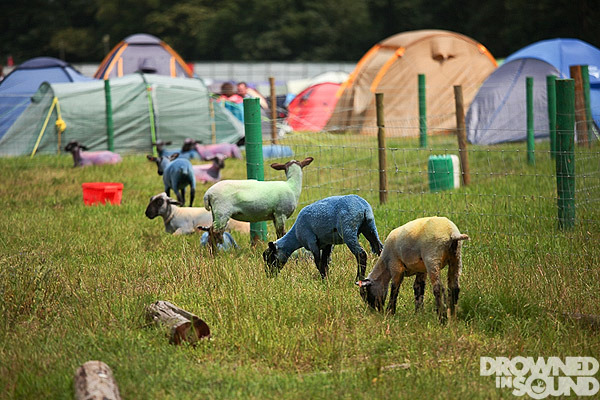
One thing that particularly struck me about Latitude (aside from the incredible coloured sheep) was the intensely laid back atmosphere. 'Intensely laid back' seems like a bit of an oxymoron, but there was just such an absolute lack of pressure to do anything unwanted, or to absolutely have to be anywhere at any one time. This made for a truly personalised festival experience, tailored to your wishes and desires, and not at all focusing on one aspect of culture.

The relatively close-knit layout of the festival meant that it was very likely that you would bump into anyone and everyone within your field of acquaintance; this created a fabulous sense of communal enjoyment of the proceedings, that everyone could take part in and enthuse about together. This make-shift society of enthusiastic music lovers created what Kevin Parker of Tame Impala called "our own little utopia", where anything was allowed. This gives you the freedom to actually be able to let go, forget any sort of stress or worries that have been nagging at you, and simply go where the wind takes you. That's the very clichéd way of saying that fuckin' anything goes.

Source: eFestivals
All this, and I haven't even gotten to the music yet. It was the most perfectly selected array of bands that could ever have been displayed at any festival ever in any universe ever. It catered for everyone's tastes, whether you're into indie rock, soft pop or a little bit of folkie goodness, they had it all. Despite Two Door Cinema Club pulling out at the last moment, the organisers could not have found a better replacement. Lily Allen was simply incredible, mixing her usual wit and sarcasm with pure talent that captivated the audience and created such an incredible buzz around her. Other highlights included Crystal Fighters (for the sheer energy of Plage, if anything), Haim (need I say more), The Black Keys (because they are perfect and no one can argue otherwise) and Gengahr, whose chilled out set gave the impression that they really weren't too fussed about being at Latitude, but whose quality of music and enthusiastic performance proved this to be utterly false.

The main thing that came out of the weekend was how open and accepting Latitude is as a festival. You can stay up all night dancing to some fantastic DJ sets, or you can go to bed immediately after the headliner for the evening. You have the option of seeing both Dara O'Briain or Rudimental in one evening. You can even eat whatever the fuck takes your fancy; the point is, it doesn't matter who prefers what, because everything is catered for, and everything is available. This idea of exclusivity disappears as soon as you walk in the gates.

Tuesday, 13 May 2014

The Black Keys - Turn Blue

Source: Wikimedia
The Black Keys, the one and only dynamic due of awesomeness, are back. Their latest album Turn Blue landed today, with the run up being a couple of singles and a whole lot of hype. The pair played on Jools Holland, David Letterman and Zane Lowe a few days before the release of Turn Blue, and NME have been fangirling over it for at least a month, leaving the rest of the human race, fed only on tidbits, to wait with baited breath for more. There's no doubt that it's incredibly different to anything they've ever done before, but the brilliant thing about The Black Keys is that they retain the essence of Black Keys-ness, no matter what they do with their music. If you trace their albums from the heavy blues rock of The Big Come Up all the way to the catchy riffs of 2011's El Camino, they've undeniably made giant steps; however, there's definitely a connecting thread through all of their music: the defiance to not do things the way they're expected to. It's something that's so intrinsically attractive about their music, and it's what's gained them several million fans worldwide.

Every music journalist who got their hands on a press copy of the CD has been raving about how "daring" Weight of Love, the first track on the album, is. Sure, it's daring only in that it's the longest song they've ever done (clocking in at 6.50) but apart from that, it feels like an utterly natural start to the album. Time passes without you noticing, because everything is just so well timed so as to create a seamless transition from one section into another. At it's core, though, the epic guitar solos and blues allusions are full of anguish and pain. Considering that the album was written when guitarist and vocalist Dan Auerbach was going through an apparently quite messy and public divorce, this isn't very surprising. There's so much behind that fuzzy guitar solo at the beginning that us as mere listeners can't even begin to access until you see the passion with which they perform live. That's when a whole other dimension is added on to their music, and my suspicion is that they will most certainly not disappoint with respect to Turn Blue.

Source: Wikipedia
Where El Camino was daring in its dive into the world of commercially viable and universally accessible music, Turn Blue is daring in its exploration of those individual and fleeting touches that instantly make a song miles better. Take Bullet In the Brain. The deep "waaaah" (for want of a better description) of the post-chorus section is transporting, and the hint of synthesiser during the second verse is just genius. Just for that, it's one of my favourite songs on the album, because these touches exhibit the musical awareness of The Black Keys and Danger Mouse (the producer who's worked with them since their album Attack & Release) both as listeners and artists, that allows them to make the songs intensely interesting, not just good sing-along material. The same is true for 10 Lovers, which gets the balance between introducing new elements and maintaining the old Black Keys feel just right. It's also a skill that Auerbach can make heartbreak (and lyrics like "when I hear them use your name/I get all choked up inside") seem like the sexiest and most manly emotion on earth.

I would very much like to talk about It's Up To You Now. Very very much. There's not much to say except this: it's a fucking tune and why are more people not enthusing about it. This is where Patrick Carney's skills as a drummer are exhibited, not through technical brilliance, but in instinctively knowing what kind of beat will make people want to dance. The shift from the heavily driven first section into the insistent second section and then back again is unexpected and beautiful. This song has achieved what every song wishes it could achieve: when it finishes, the listener is left gasping for more and wishing it was longer. That, my friends, is the mark of what those in the know call a tuuuuuuuuuuuuuuuuuuune.

I had a very strange experience going from the piano-led In Our Prime to Gotta Get Away. Bearing in mind that In Our Prime is one of the few Keys songs that places such a big emphasis on the piano (and is thus by implication the most soulful and meaningful of the lot, naturally yah) it's quite a shock to suddenly go from that to Gotta Get Away, which I thought was a Rolling Stones song coming up on shuffle on my iPod. Auerbach seems to be channeling his inner Jagger (don't pretend you don't have one) with this one, especially with the opening guitar solo, a sound so typical of a lot of the songs on Exile On Main Street. It's a good old 60s influenced toe-tapper (excuse the word, I instantly feel 40 years older for having used it) that aims to please. More please.

At the end of this, I really don't know what to say. Turn Blue is an album that wears the band's experiences on its sleeve, and is consequently dripping with heart ache and deep, irreparable pain. Through this, they've kept in line with their general tendency to top whatever the previous album was by about a million. Despite the album's individuality, I can't help but hear Iggy Pop's Turn Blue whenever I see the title, no matter how hard I try. The struggles of the musically cultured *sigh*. Still, the contents itself couldn't be anything but Black Keys. Thank the lord.

Rating: 9/10

Recommended Tracks:
10 Lovers
It's Up To You Now
Weight of Love

Monday, 7 April 2014

Wild Beasts - Live at the O2 Academy Brixton

Given the hugely positive reception for Wild Beasts' fourth album, Present Tense, the bar was set high for the level of last Tuesday's performance. Present Tense made it onto NME's list of the best albums of 2014 so far, and it's been highly praised by all who've heard it. It's just praise indeed, but it takes a while to warm up to Present Tense, just because it's such a big step away from 2011's Smother. Anyone who claims to be a Wild Beasts aficionado (and there aren't many, but those who do are truly dedicated) will tell you that the shift isn't obvious, but more of a subtle move away from the insistent and yet artistic vulgarity of songs like Plaything. It's intelligent without being inaccessible; there are songs about sex that are less about fulfilling an animal desire and more about fulfilling an emotional deficit. In short, Wild Beasts have grown up. They'd probably resent that description quite a lot.

Psychedelic light show
With East India Youth supporting, and with the O2 Academy Brixton as the host for the festivities, it looks set to be an evening of intelligent music and heavy bass. For a one-man band, East India Youth's William Doyle is surprisingly captivating and bad-dance-moves inducing. Everything is achieved with his MacBook and a synth, all wired-up to amplify the noise by a billion. His sufficiently awkward refusal to make eye contact or interact with the audience made his absorbed and passionate performance even more interesting. A "hello" would've been nice, though.

When Wild Beasts come on, it's clear that all their hard graft to achieve some sort of notoriety has paid off; the screams are incessant throughout their set. They kick off with the beautiful Mecca, from their new album, which starts off in a languidly passionate way, giving them plenty of scope for the rest of the evening.

Some bands, when they've just released a new album, prefer to play that album from start to finish, maybe giving the audience a cover, or the staple old song that gets wheeled out at every gig they do. Not so with Wild Beasts. They gave a nod to their past by putting songs like the wonderfully vibrant Devil's Crayon, from their first album, next to Daughters, a slightly disturbingly gorgeous song from their fourth. Far from being a bit strange, the contrast only demonstrates how far the band has comes from the Limbo, Panto days.

What makes Wild Beasts stand out from many other bands is that they in fact have two lead singers: Hayden Thorpe and Tom Fleming. Both men have distinctly different voices; Thorpe favours a higher range, tending more to use a falsetto, whereas Fleming's voice is gorgeously rich and smooth. It's the vocal equivalent of a chocolate fondue. In their live performances, it's fascinating to see how shared vocals work in practice. With songs like All The King's Men, Thorpe leaves Fleming to do his thing, but in Reach A Bit Further, the two voices mix and complement each other perfectly. On the album, it's wonderful. Live, it's phenomenally phantasmagorical. Alliteration intended.

Wild Beasts
The band members themselves clearly adore what they do. Their performance is full of enthusiastic headbanging, arm-moving, piano-bashing, and, in Thorpe's case, a new method of wide-legged dancing whilst playing the bass. These guys ain't nothing if not inventive.

Wanderlust, the leading track from the new album, isn't revealed until the encore, but it gets everyone screaming "don't confuse me with someone who gives a fuck" with visible glee. The night ends on the epic End Come Too Soon, sending the crowd into hysterics when everything dies down in the middle. It provides the perfect farewell to what really couldn't have been a better performance.

All that show did was prove to me how undeserving Wild Beasts are of being called "pop". It's far too small a bracket for the wide-ranging styles and lyrics that they encompass across their four albums. Their songs are too good to be overexposed with too much airplay. Their albums deserve to be picked up and discovered quietly, and then listened to with awe and wonder. Reader, I call upon ye to love Wild Beasts, and aid me in my quest to love them quietly. I find that too much screaming and shouting only drowns out the music.