Thursday, 4 February 2016

Django Django live at Stylus, Leeds

Fresh-faced thirteen year olds attending their first gig rub shoulders with seasoned rockers, forming the biggest motley crew imaginable and packing out Stylus for the men of the hour: Django Django. As the band appears, resplendent in piano key shirts and Christmas jumpers, they are decidedly uncool. All of that is about to change, as lead singer Vincent Neff picks up a tambourine and wields it like a talisman, entrancing the crowd as he waves it back and forth for ‘Hail Bop’. All of a sudden, the four gawky lads stood on stage are transformed into magicians, placing the audience under a spell as they weave their way through an incredibly varied set.

Django Django prove themselves to be more inventive than just another indie electro band. ‘Love’s Dart’ featured the make-shift use of a cardboard box as a drumset and coconuts as percussion; paired with an acoustic guitar, it provides a lulling contrast to the preceding ‘Reflections’.

They also expand outside of their generic bounds with ‘Slow West’; written for the Michael Fassbender film of the same name, it’s the closest the band will ever come to a Mumford & Sons-esque vibe without swapping their synths for banjos.

The most striking thing about Django Django is how much their performance suddenly puts their albums into context. As recordings, it’s easy to see how, objectively, they are undoubtedly quite good, but not hugely impressive or memorable. Live, they are electrifying. Where on the album, tracks like ‘Skies over Cairo’ are repetitive, when performed, you never want them to end.

The band’s own enthusiasm during the show is infectious. Carried through by the mesmerising drum beats, the band enter their own trance-like world which, rather than excluding the audience, pulls them in further.


Django Django: indie rock’s nice guys changing your life one strobe light at a time.

Monday, 11 January 2016

Obituary for David Bowie


'Ain't there one damn song that can make me break down and cry'

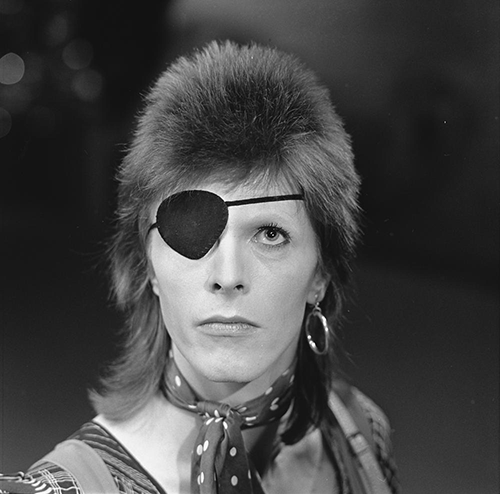
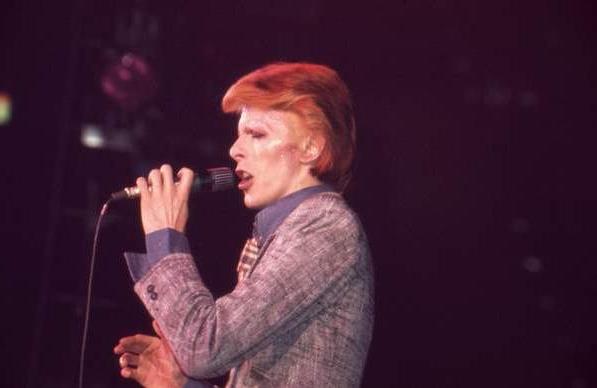
David Bowie: 1947-2016. As much as it pains me to write these words, David Bowie died this morning after suffering with liver cancer for 18 months. Living long enough to see the release of his latest album Blackstar, he died just two days afterwards. Suddenly, the album clicks into place: 'I Can't Give Everything Away' seemed before like a tease, and now becomes a final goodbye; the opening lyrics to 'Lazarus', 'Look up here, I'm in heaven/I've got scars that can't be seen', fall into place as a veiled reference to the cancer. Blackstar becomes his swan song, his final parting gift to the world.

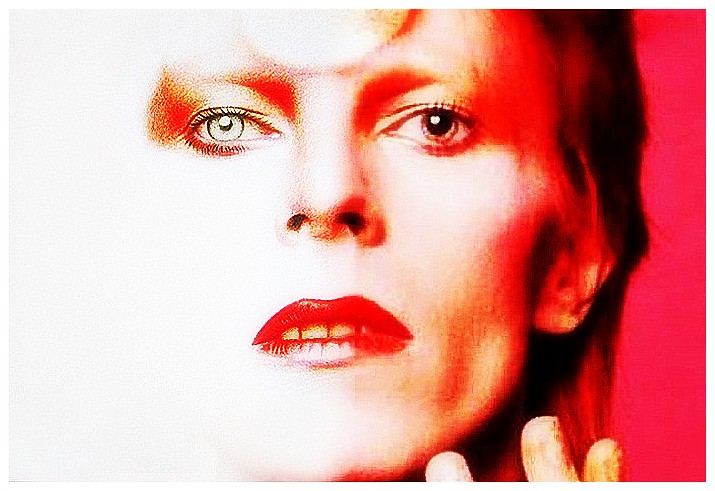
Looking at the incredible span of his career, it's hard to believe that one individual can have accomplished so much. David Jones became David Bowie became Major Tom became Ziggy Stardust became Aladdin Sane became The Thin White Duke became The Man Who Fell To Earth. He reinvented himself again and again and again before anyone had a chance to call him old hat. There is so much of modern life and culture that only exists because Bowie had the guts to push the boundaries, to boldly go where no man had dared to go.

Maybe because he wasn't fully a man. You have to consider the courage and strength of will it must have taken to have written such an astounding album as Blackstar whilst suffering from cancer and, at the same time, keeping both of the above heavily under wraps. He remained stoic to the last, maintaining his mystical allure by refusing interviews and tours, drawing the world further into his mysticism. Furthermore, what man could dare to embody the alien beauty of Ziggy? What man had his ethereal handsomeness? What man could pull off a knitted jumpsuit like David Bowie? He was and shall remain superhuman, extra terrestrial, not quite of this world.

There are not enough words in the world to even begin to touch on the wealth of creativity Bowie possessed. Not quite content with storming the music industry, he branched out into acting, delivering fantastically memorable performances: as Jareth the Goblin King in Labyrinth, Thomas Newton in The Man Who Fell to Earth, himself in Zoolander, Nikolas Tesla in The Prestige. No child who has watched Labyrinth can ever forget The Bulge.

As silly as it is, I feel deeply touched by his death, as though I've lost someone incredibly close to me. And I tell myself that I have no right to feel this way, that I didn't know him personally, and it's a terrible affront to all of his nearest and dearest that I have the nerve to presume such an affinity with him. But in all honesty, the fact that so many people feel this way demonstrates his absolute and undeniable talent. If his music was powerful enough to make an eight year old, sat in her bedroom listening to Ziggy Stardust and dreaming of the starman, feel as though she experienced the day Ziggy died in 1973, then his career was a success. To make people feel the core of your music is surely the goal of all musicians. Bowie achieved this in force. Goodbye to the man who sold the world, gone to join the stars that he came from.

Sunday, 15 November 2015

Grimes - Art Angels

Grimes’ long-awaited new album is finally here. Claire Boucher delivers once more. Just looking at the album art, a terrifying illustration of an entrancing three-eyed girl crying tears of blood, this album will deliver just as much of a curve-ball as Visions did. The collaborations confirm this, with tracks that feature the RnB darling Janelle Monae and another one with Taiwanese rapper Aristophanes. Typically, it’s confusing, it’s eclectic, and it’s 100% Grimes.

Art Angel marks a definite shift in direction for the Canadian singer. Featuring everything from dramatically orchestral pieces (laughing without being normal sounds as if it’s been taken directly from a movie soundtrack) to the Graceland-inspired opening for Butterfly. One particularly surprising change is the sunshine and sugar-infused California; it’s how Grimes would sound if Simon Cowell produced her and she had her own brand of below-average perfume. It’s not the paradox that we expect with Grimes: predictably original. It’s electro pop, pure and unashamed.  It would be an alright song had anybody else done it, but for Grimes, it leaves you a little flat.

The whole album is far catchier than Visions; there are discernible verses and choruses, and you’re unwittingly drawn in so that before you know it, you’re on a tennis court in a Victorian wedding dress re-enacting the Flesh Without Blood video. Art Angel has an undeniable energy to it that bounds along from track to track like an excited puppy that bounds off in the park and drags you along on the lead. Realiti is a particularly stand-out track, with typically beautiful, dark, twisted and fantastical lyrics like ‘when we were young, we used to live so close to it/And we were scared that you were beautiful/And when I peered over the edge and seen death, if we are always the same’. 
Seeming non-sequitors suddenly assume an utterly new meaning when put in the context of this brilliantly ascending track, climbing higher and higher. In spite of its name, it almost transcends reality.


It’s different, but brilliant. It’s pop-y, but perfect. It’s great, so it’s definitely Grimes.

Wednesday, 23 September 2015

Oh Wonder

Photo: Allmusic
The London-based duo may have only just released their debut album, but they are pretty much pros in the music biz by this stage. Releasing one track every month for a year, Anthony West and Josephine Vander Gucht created a gradual hype that has built and built around them: a much-deserved hype that continues to grow, selling out shows in New York, Amsterdam and London even before the release of the album. That is, if nothing else, impressive for a rookie band from The Big Smoke.

With beats and synth reminiscent of Jungle, Oh Wonder pose a similarly difficult-to-pigeon-hole conundrum. The duo also employ the same tactic of double-tracking their vocals, both singing simultaneously. However, the contrast in timbre between the male and female voices allows far more room for experimentation, and they use this to their advantage. It stands out particularly well in simpler tracks like All We Do, adding variety and interest to an otherwise simply produced track.

Oh Wonder possess the handy knack of knowing how much is too much, and when to ease off. In Lose It, the introductory piano becomes the foundation on which they build the rest of the track, with layers drifting in and out as necessary; drums are built up and reduced throughout, synth becomes an ornament rather than a necessary part of the track, and the sparse bridge is the perfect lead-up to the chorus. It's everything a pop song needs to be: catchy, restrained and then loose in all the right places.

The lyrical content of the album is beautifully optimistic; take Landslide, for example. Once you brush aside the immediate Fleetwood Mac associations, you realise it's a rather lovely song of encouragement. Lyrics like 'I know your hope is heavy/But you'll get over it/You'll find another life to live' are supported and carried perfectly by the instrumental parts. The beat of Midnight Moon picks you up and takes you with it; the opening lyrics 'You with the wide eyes, don't lose your courage', along with the repeated last word, might be rather generic, but the crafting of the lyrics around the beat refreshes the old technique and draws you in.

To sum up Oh Wonder in three words: simplistic, minimalistic, and actually rather sweet. Oh Wonder definitely isn't a misnomer. If anything, it's an invitation.

Rating: 7/10

Recommended tracks:
Livewire
Without You
Technicolour Beat

Friday, 7 August 2015

The Maccabees - Marks To Prove It

After a dry spell of nearly 4 years, the Maccabees are finally back. Following their widely praised reappearance at Glastonbury, they are definitely, certainly, undeniably, back.

Marks To Prove It is a testament to what The Maccabees can do when they cut loose. The album was brought about after four years of creative stagnation, unsure of how to follow the ethereally layered Given To The Wild, and they've found the answer in unashamedly turning their backs from their previous work and embracing a more nocturnal, haunting quality that they've found.

It's a very self-contained album, kicking off with the rawness of the title track; every song, from the beautiful and heart-wrenching River Song to the unexpectedly tragic Something Like Happiness, ties and flows in to one another. The band relies on the stripped-back pianos in Spit It Out and Silence to provide a tenderness, although far from feeling worn or clichéd as a device, it adds the perfect amount of emotional sensitivity to the songs.

The album brings to light a darker, more thoughtful side of The Maccabees. Even the title of the song WW1 Portraits demonstrates a broadening of their material, which pays off. There's no pretending to be the nation's sweetheart band; there's a brutal candidness contained with the simplicity of the lyrics 'just so beautiful', repeated throughout the song and most notably at a point when you think the band are about to break down into their trademark guitar-heavy, high-flying vocals bridge, but which remains at the same volume level as singer Orlando Weeks' murmured intro.
Lead singer Orlando Weeks

The feel of the other tracks grounds the album in the band's native Elephant and Castle in its frankness: it doesn't pretend to be bubbly and upbeat, as Toothpaste Kisses was, because it isn't. Songs like Ribbon Road may, from the title, promise a certain amount of alliterative joy in the way it rolls of your tongue, but the rolling drums and darker, crunching chords undercut Weeks' soaring voice.

Yes, Marks To Prove It is absolutely nothing like Given To The Wild. Yes, it will be a disappointment to fans who were expecting it to be. No, this is not a bad thing. In fact, it couldn't be better.

Rating: 8/10

Recommended tracks:
River Song
Dawn Chorus
Spit It Out

Monday, 3 August 2015

Lianne La Havas - Blood

With her 2012 debut Is Your Love Big Enough?, Lianne La Havas took everyone by surprise, including herself; the titular track from her debut claims 'never thought it would happen/But I found myself in a secondhand guitar'. Ya know what, Lianne? We're so glad you did.

Where Is Your Love Big Enough? was a very raw portrayal of heartbreak, Blood displays a distance that shows how much La Havas has grown up. Wonderful and Good Goodbye are beautiful not only in their composition but their forgiveness and maturity. La Havas' voice transports the listener to a place that's built on the purest strain of each emotion, and when you arrive with her you can't help but cry at how beautiful and terrifying this place is. La Havas is far from your typical Identikit female singer-songwriter who plays guitar, and the sheer purity of her voice and lyrics is enough to prove this.

The trick to La Havas is that she doesn't dwell on one aspect for too long. Although she is undeniably brilliant at the more elegiac songs, she injects beautifully unexpected punches into her tracks that make her music so hard to pin down: the horns in Green & Gold that provides funk for the chorus and a floating melody for the bridge; Never Get Enough starts off as a typically acoustic guitar-driven song, with the unexpected feedback of an electric guitar kicking in for the chorus, shifting effortlessly between the two for the rest of the song; the reverb on 'turn' halfway through Grow; the entrancing intro of Unstoppable that shifts effortlessly to the wonderful pop song it is. Lianne La Havas is much more than a soul singer, but it doesn't do to pigeon-hole her. We'll only end up confused.

With many artists, there's a tendency to abandon completely what made them famous in the first place. With Blood, La Havas recognises that her guitar makes her special, and every song is carried in some way by this. Everything from Unstoppable, which expands to the size of a galaxy as it goes on, to Midnight, is upheld in some part by the familiar pangs of a guitar. Far from inhibiting the development of her songs, these two examples alone show how it merely provides a platform for La Havas to make dazzling leaps and bounds in development.

I don't think we even need to mention the sheer bedazzling power and range of her voice. She's astounding.

Lianne La Havas crept onto the scene in 2012. Blood boldly pushes the door open, proclaiming her presence.

Rating: 8/10

Recommended tracks:
Unstoppable
Green & Gold
Never Get Enough

Sunday, 12 July 2015

Florence + the Machine - How Big, How Blue, How Beautiful

Coachella, Glastonbury, an incredible new album: 2015 is Florence Welch's year. She's moving effortlessly from height to height without even pausing to take a look around at the distance she's covered. It's impressive, scary, and oh so pleasing to watch.

Anyone who attended a school disco between the years of 2009 and 2011 will remember You've Got The Love blasting out at full volume at the end of the night to calm down all the crazy 14 year olds, high on too much coca cola and large amounts of over-enthusiastic dancing. When Welch released her debut, Lungs, there wasn't a critic out there who didn't consider the double-edged sword that such a masterpiece presented; 
it was a marvel of an album, but was problematic in terms of posing the question 'so where can she go from here?' Onwards and upwards, my friends.

The beauty of HBHBHB is that it switches seamlessly between huge, confusing, anthemic organised messes like Ship To Wreck, Queen of Peace and Mother, to quieter, more considered tracks like Various Storms and Saints, St Jude and Caught. It's an album of contrasts that exaggerate and reinforce their opposites, not forcefully or clumsily, but skilfully, as though Florence is weaving a bigger picture, encouraging us to step back and look at it instead of examining the details in the individual tracks. HBHBHB takes us back to a time when music was just as much about the experience of an album as the hit songs it contained.

Not only does it present to us a wider picture, but this picture is clearly deeply personal to its painter. Lyrically, HBHBHB is moving and considerate. What Kind of Man deplores a tempestuous love affair, presenting us with Florence's insight that seems to contain the wisdom of a kung fu master as she bitterly spits 'sometimes you're half in and then you're half out/But you never close the door'. The titular track explores the excitement of a new relationship, setting in our laps such a killer opening line as 'between a crucifix and the Hollywood sign, we decided to get hurt'. In bringing her own feelings and experiences to her songwriting, Florence creates a mysticism even deeper and esoteric than tales of self-sacrifice in Rabbit Heart, or demon lovers in Howl. 

Welch also seems to have grown apart from the hippy trippy persona she had been given by the media. Although she remains an ethereal being not worthy of our earthly praises, the instrumentation of her tracks has developed far beyond the odd harp and some heavy timpani. She utilises the brass section much more frequently, and even when she has the normal line-up of guitar, bass, piano, drums, she makes it work to her advantage. Take Delilah, for example. The multi-tracked vocals provide far more texture, where the strings and piano add atmosphere to the pounding drums. As the song builds and swirls, more and more instruments put in their tuppence worth to make Delilah one of the most beautiful and dance-inducing tracks on the album.

If there were doubts that Florence was up to headlining Glastonbury, this album surely proves that not only is she up to it, she surpasses all expectations. We bow before you, our ginger-haired queen.

Rating: 9/10

Recommended tracks: